Halton Graphics Ltd.
  • Home
  • About
  • Request a Quote
  • Submit Artwork
  • Contact Us
  • Blog
  • Home
  • About
  • Request a Quote
  • Submit Artwork
  • Contact Us
  • Blog
Picture

Colour Selection in Logo Design

5/16/2020

0 Comments

 
Picture
We in the Caribbean know the importance of “colour”. Blessed to be surrounded by a vast kaleidoscope of vibrant hues & shades, we live in an environment that emotes feelings of joy, happiness, relaxation and peace. When you think about it, “colour” is perhaps one of the unrecognized elements that make us a popular tourism spot. After all, who wouldn’t want to emerge themselves in such an environment?

Colour is scientifically proven to convey messages & evoke emotions. In the context of logo design it’s therefore very important to understand what specific colours “say”, and how to pick a colour scheme that is synonymous with the image you're trying to build. While the things we feel when we see particular colours may not be universal, there’s no question that selecting the right colors for your brand is an essential part of marketing.

When you’re in the market for a new logo, picking one or two colours that work together is preferable to choosing many colours. However, people in entertainment, design, or other creative industries may want to use a more varied palate to convey what they do.

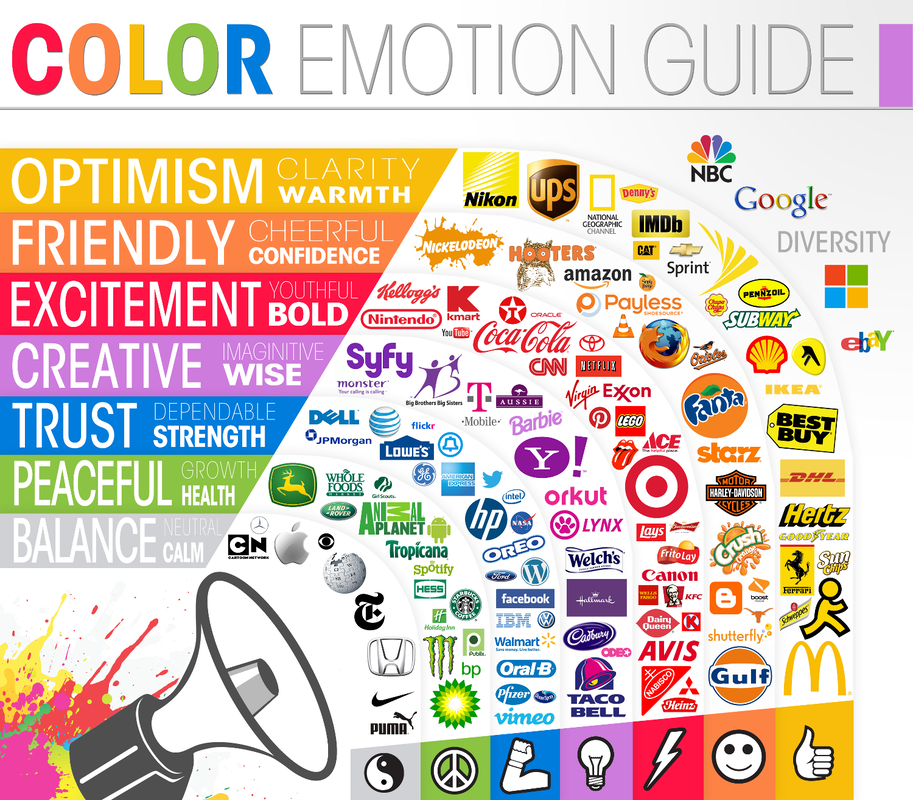
Common Colour Choices & What They Mean
While it's dangerous to be overly simplistic when considering the psychology of colours, it can be helpful to consider some of the most common colour associations so you can keep them in mind when choosing a palette for your logo.

  • In most Western cultures, red is used to convey a sense of excitement or even bravado. It is often considered the colour of both romantic love and passion. It can signify heat, fire, or spice. In some situations it may also be a warning of impending danger.

  • Green can have multiple meanings. On the one hand, it is often associated with nature and natural products. It may also be associated with new beginnings since it is symbolic of spring. Dark green may be used to represent money or finance, and yellow green or pea green may be used to communicate jealousy.

  • Blue is commonly associated with cleanliness and purity, and is a popular choice for corporate logos. It is widely considered to be a conservative colour and may convey trustworthiness and stability. In some cultures, it is a symbol of mourning and may also represent ethereal things. It can be a calming colour too.

  • Yellow may be associated with sunlight, radiance, and good cheer. It is sometimes perceived as a childish colour, although gold shades are an indication of exclusivity or wealth. It can be related to charm and confidence, but is also sometimes used as a symbol of caution (as in road signs or yellow traffic lights).

  • Orange has the warmth and excitement of red but is less aggressive. It may be linked to ambition and also to creativity. Orange is sometimes used a symbol of autumn. It is the colour least likely to be named as a favourite colour in surveys, which means that it should be used sparingly.

  • Black has a wide variety of associations. Some people might think of it as symbolizing night or even evil, while others associate it with elegance and authority. In many countries it is the colour of mourning.
 
This is not a complete list, but it should give you an idea of how widely varied colour associations can be.
Picture
Source: www.thelogocompany.net
Tips for Choosing the Right Colours for Your Logo
When choosing colours for your logo you should think about the associations that people are most likely to make and use that information in your decision. Here are some tips to help you do that:

  • Begin by thinking about your industry and what colours best convey what you do. While there are no hard and fast rules about this aspect of colour choice, it is certainly true that green is widely used by agricultural companies and blue is widely used by financial institutions. Looking at other logos in your industry may help you spot patterns.

  • Next, consider cultural associations with the colours that are most commonly used in your industry. For example, purple is a creative colour and also may be associated with luxury. For that reason, it might be a great choice for an auction house that specializes in fine art, and a poor choice for a bookkeeping firm.

  • If you’ll be using your logo in more than one country, do a bit of research to find out if the colours you are considering have meanings that might be detrimental or contrary to your branding message.

  • Consider what shades of colour to use. A bright cerulean blue could work for a preschool but would be less advantageous for a cleaning company, which might choose a light, natural blue instead.

  • Finally, make sure that the colours you choose look good together and complement one another. Often, using contrasting colours can help your logo stand out and attract attention. A good logo designer will be able to work with you to choose colours that are exactly right for your brand.

The colours you choose for your logo can have a significant impact on how well you are able to convey your branding message and connect with your customers. Instead of simply picking colours you like, take a step back and consider all the implications of your choices. The time you spend considering colours will pay off in the long run.
0 Comments


Leave a Reply.

    Archives

    June 2024
    May 2020
    February 2020

    RSS Feed

Powered by Create your own unique website with customizable templates.